

Blurred vision is a warning sign of a carotid artery blockage, one of the leading causes of stroke. The good news is modern carotid artery stenting offers a safe, easily performed way to restore blood flow to your brain and protect you from future attacks.
What are Carotid Arteries?
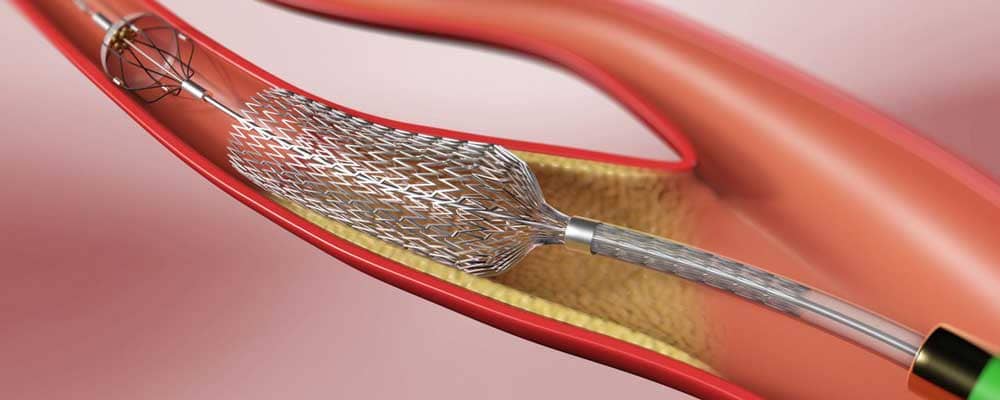
Carotid Artery is an advanced procedure which we perform through the skin into the carotid arteries in your neck that supply the brain. We use a stent, which is a metal mesh tube, to open up the narrowed arteries and restore smooth constant blood flow which in turn helps to prevent clots that cause stroke.
What are the symptoms of carotid artery disease?
Many don't see any at all until the artery is very narrow. Also, reports of Transient Ischemic Attacks (TIAs), which are short lived symptoms like feelings of weakness, blurred speech, or vision loss, are a strong warning that emergency evaluation is required.
How is the carotid stenting procedure?
The procedure is under local anesthetic. A small tube is put in by the femoral artery in the lower leg and transmitted to the neck with the use of advanced imaging. A small balloon is used to open up the blocked area, and then a stent is put in to keep the artery open. This right away restores blood flow to the brain and greatly reduces the chance of stroke.
Who needs Carotid Artery Stenting?
- Over 70 percent blockage in your carotid artery
- Mini-strokes or TIAs with experience
- Narrowing identified through angiography or ultrasonography
What defines the internal and external carotid arteries?
They complete a series of separations that includes external and internal carotid arteries. The external carotid arteries are responsible for the blood supply of the face and neck. The internal carotid arteries on the other hand are responsible for the blood supply of the brain. The carotid arteries are at risk for a number of medical conditions, which can be of vascular and nonvascular origin. Some of these include atherothrombotic and cardioembolic attacks and also carotid artery surgical dissection. Each of these conditions carries a different risk profile and potential effects. The carotid arteries also undergo a disease of atherosclerosis. This process can be monitored and evaluated to see if additional medical procedures are necessary.
What happens after the procedure?
The patient will remain under observation for a short time. Antiplatelet medications will be provided to stop any potential clot formation. The artery's health will be monitored with additional imaging to ensure it remains open.
Benefits of Carotid Artery
- Restores healthy blood flow to the brain
- Reduces stroke risk significantly
- No major surgery or scars
- Quick recovery and discharge
- Long-lasting artery protection with stent support